If your medical product relies on software to function or is classified as software as a medical device (SaMD), automated software testing can reduce the burden on your quality system. While AI and intelligent systems have improved some aspects of medical software control and testing, automation has been a cornerstone of quality engineering long before AI became mainstream. What has changed is not the existence of automation, but the maturity, scale, and impact it now delivers to organizations.
In this post, you’ll read about recent improvements that strengthened our automation pipeline, the lessons we learned, and how the changes are creating measurable value for both our software engineering team and leadership.
What is software test automation for medical devices?
Software test automation for medical devices is the use of automated tools to repeatedly execute software tests and document the outcomes. Test automation is only one of many practices such as code review, change control, and cybersecurity that are essential to software quality management. It can identify many software issues, but not all.
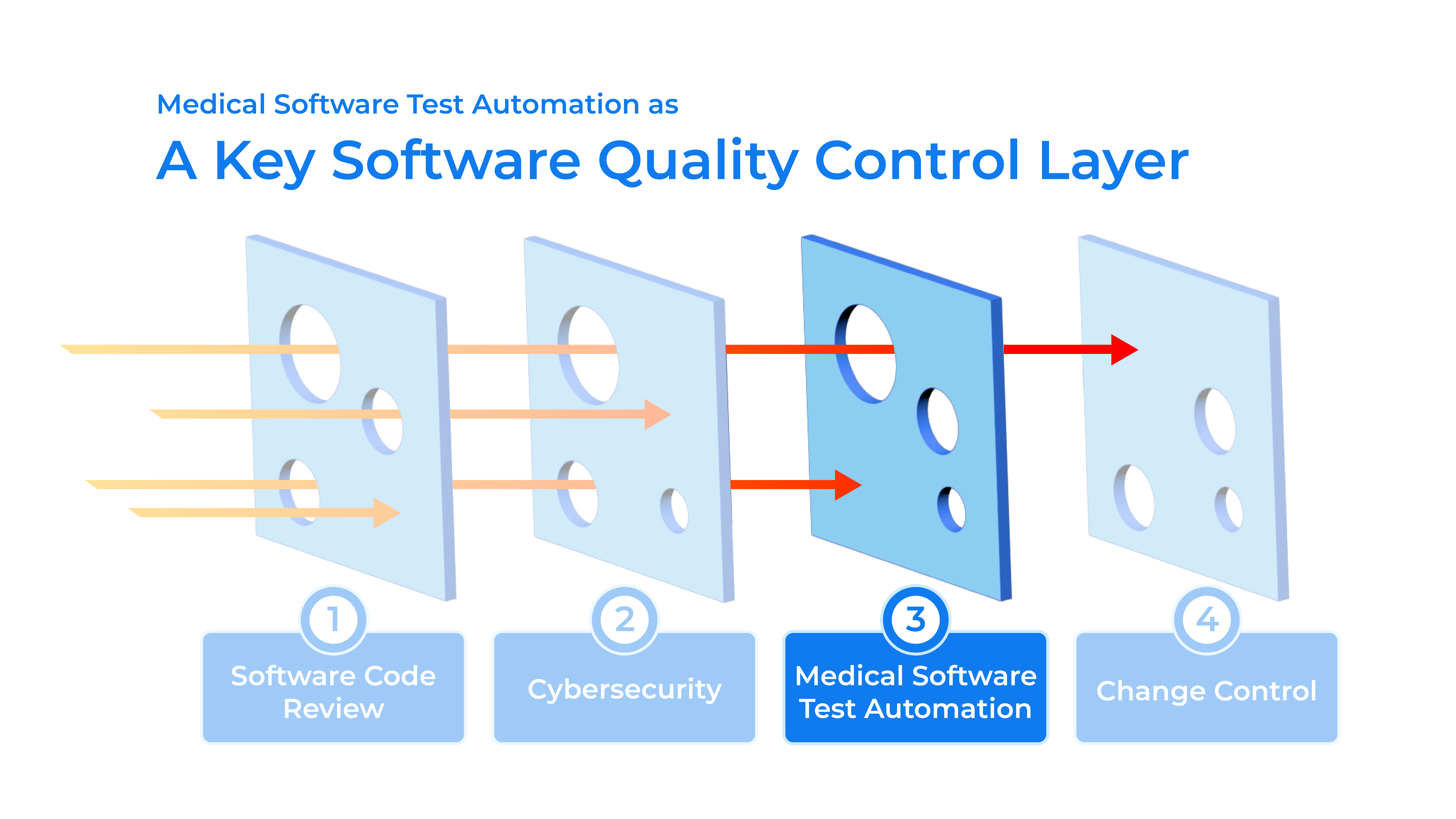
Testing typically occurs on a set schedule (such as daily or weekly), regardless of any updates or patches to the software. This means that developers have regression coverage. A regression in software is a bug or failure in a feature that used to work well, usually as a byproduct of changing other features. Regression coverage is a type of defense that helps catch these unexpected errors. Software test automation provides regression coverage in addition to verifying the direct updates to code.
Why does software test automation matter for my medical device?
Because software is typically re-tested after each update and the results must be documented, the burden of testing is high without automation. Additionally, by turning results into actionable data, the automation pipeline supports more informed decision-making for leadership teams and across the organization.
Automation helps software engineering teams by:
Reducing repetitive manual work and allowing resources to be used elsewhere
Improving regression coverage when software updates are released
Increasing release confidence for every software update
Providing faster feedback throughout development
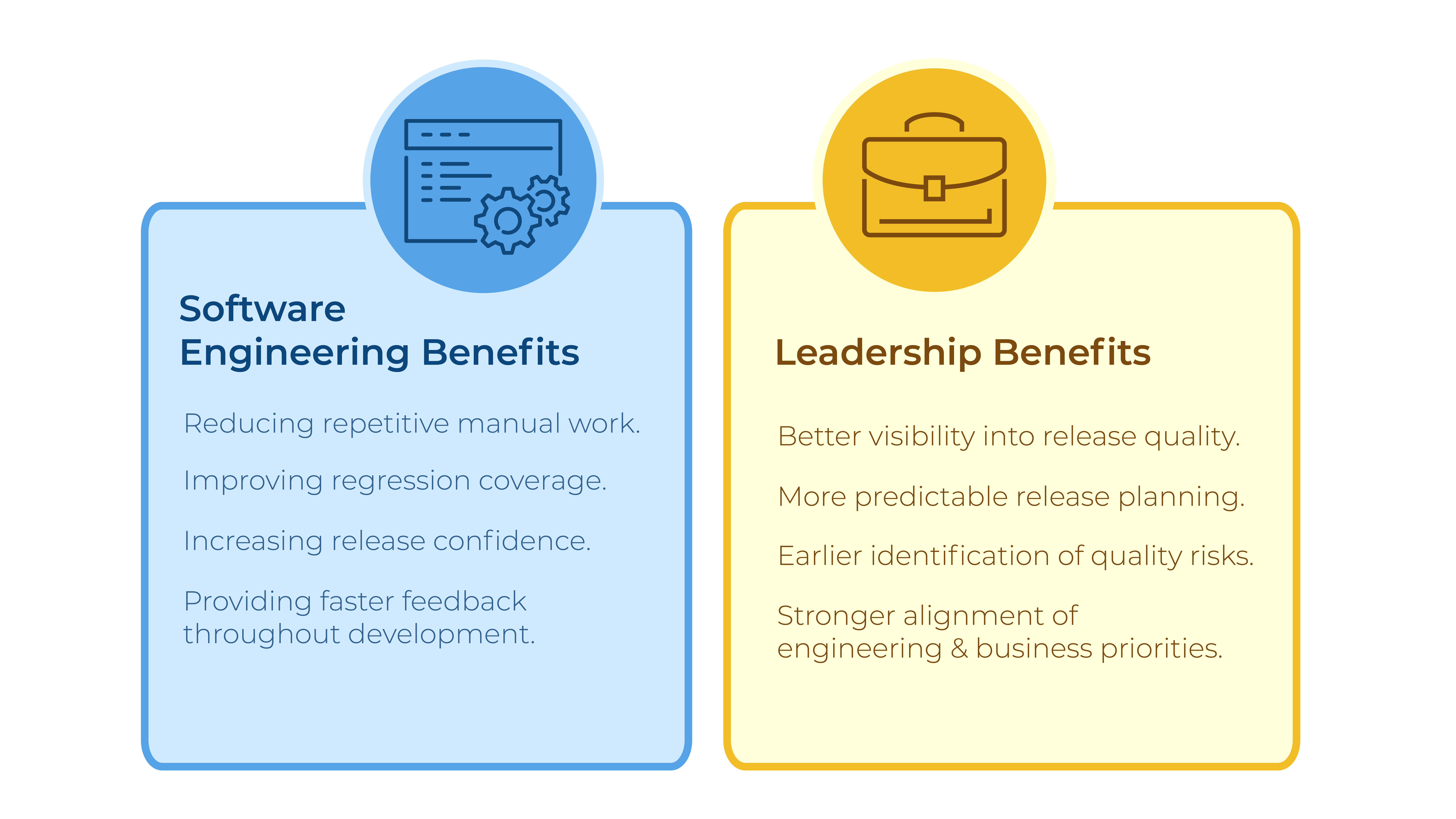
Automation also helps leadership teams through:
Better visibility into release quality through data-driven reporting and historical test trends
More predictable release planning by reducing reliance on time-consuming manual regression testing
Earlier identification of quality risks so issues can be addressed before they impact customers or delivery schedules
Stronger alignment between engineering and business priorities by making software quality measurable and visible
Does AI replace medical software test automation?
No. While AI can enhance software testing, the work of designing a test framework that fulfills FDA requirements cannot be delegated entirely to intelligent agents. The FDA recognizes IEC 62304 as the consensus standard that governs medical software lifecycles and verification. Testing and re-testing software to ensure it meets requirements is at the core of the IEC 62304 guidance.
How we built a more reliable medical software test automation pipeline
To understand the value of medical software test automation, it’s important to look at how the system works under the hood. The strength of the pipeline lies not just in test coverage, but in how reliably and securely it verifies the product every single day.
When setting up an automated framework for one software package, we faced challenges with authentication and session management. Instead of requiring login via the user interface (UI) before each separate test in a session, we designed the framework to:
- Authenticate once using a valid user flow or API-backed login
- Capture and store session tokens and cookies securely
- Reuse the active session across multiple test cases within a suite
Tests then ran in a controlled sequence once per day, allowing teams to identify regressions early and receive feedback on software quality before the next development cycle began.
Each automated test verified:
- Expected UI behavior
- Data integrity
- API responses or backend effects, where applicable
When a failure occurred, the pipeline captured supporting information, including:
- The failed assertion
- Relevant logs
- Screenshots or payloads, where applicable
Throughout execution, assertions verified that the application behaved as expected. The tests confirmed both successful workflows and appropriate handling of invalid actions, helping ensure the product performs reliably across a variety of scenarios.
At the conclusion of each run, structured reports provided engineering, QA, and management with a clear view of application health, reducing manual effort while improving visibility into release readiness.
Top recommendations for strengthening medical software automation pipelines
Strengthening our automation pipeline reinforced several important principles.
Stability matters more than test count. A smaller suite of reliable tests consistently provides more value than a larger collection of unstable ones.
Automation is a product in itself, not a one-time task. Like production software, automation requires thoughtful design, ongoing maintenance, and continuous improvement to remain effective as applications evolve.
Early feedback reduces downstream cost. Identifying issues earlier in the development process reduces rework, improves efficiency, and helps keep releases on schedule.
AI-assisted capabilities provide measurable value but should be adopted gradually. Rather than adopting new technology for its own sake, our focus remains on building practical automation that scales alongside the business.
Conclusion
Automation is not new, but building a reliable, scalable automation pipeline makes all the difference. By strengthening our automation pipeline, we’ve created a system that supports software quality, faster feedback, and more informed decision-making across the organization. As technology continues to evolve, this pipeline will continue to adapt, helping us remain resilient, efficient, and prepared for what’s next.
If your medical software could benefit from test automation or other development activities, we would like to hear about it. Reach out for a 45-minute consultation today.